Behaviour
Intended journeys matter only when real journeys confirm them.
Behaviour is where strategy meets evidence. User stories and personas are useful starting points, but confidence comes from observed interaction in
real conditions.
The behavioural lens
Product intent defines expected journeys. Behaviour analysis tests whether those journeys are actually happening for critical personas and moments.
This is often the gap between a platform that functions and a platform that reliably produces outcomes.
- Intended journey versus actual journey
- Critical persona behaviour under pressure
- Friction, drop-off, and deviation patterns
- Evidence quality behind product assumptions
Behavioural gap
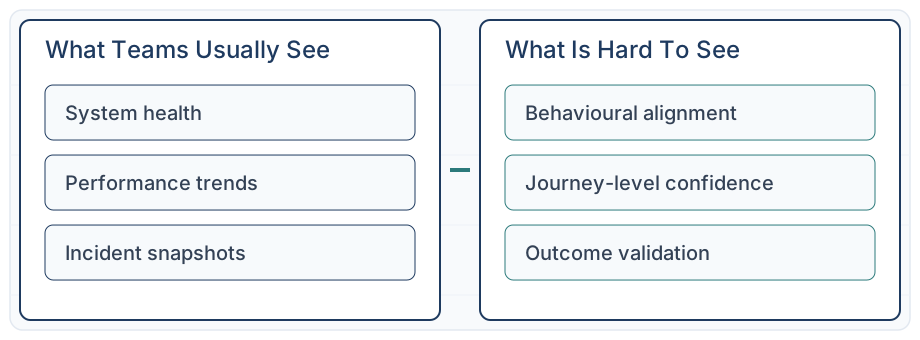
Teams usually see health and performance first. They often have less certainty on whether designed patterns match actual usage behaviour.
Validation questions
Journey evidence
- Where do users leave intended journeys, and why?
- Which steps create repeat friction for high-value personas?
- What behaviour changed after recent platform updates?
Outcome confidence
- Can we trace behavioural patterns to business outcomes?
- Are we optimising for metrics that reflect real value?
- Which assumptions remain unvalidated but decision-critical?
Why this differentiates Platform Clarity
Generic architecture work often stops at structure and performance. Platform Clarity explicitly connects architecture and scale decisions to observed
user behaviour and validated outcomes.
Next, see Observability for how these signals become durable evidence, or return to
Approach for the structured review model.