
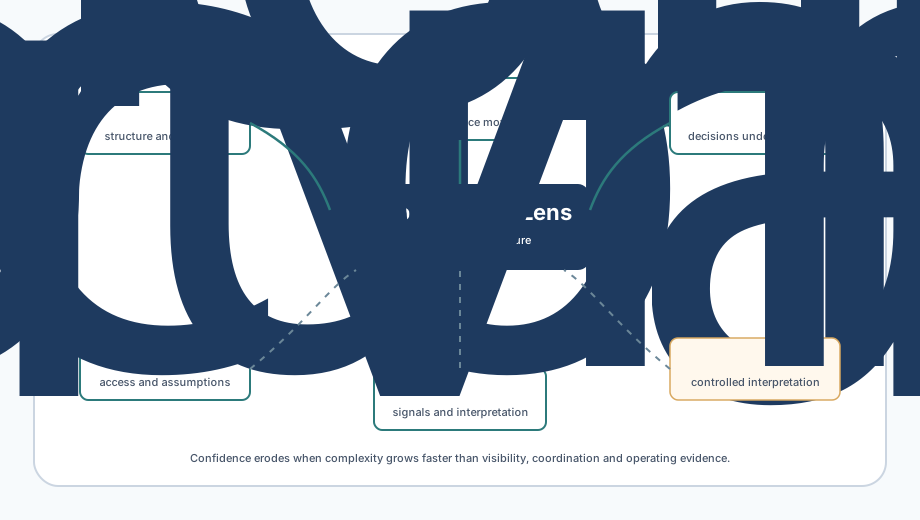
The Platform Clarity Lens
How architecture, flow, governance, trust boundaries, observability and AI context governance combine into confidence under pressure.
Operational architecture reference
A structured knowledge base for frameworks, governance concepts, operational architecture patterns, AI trust boundaries and delivery implications.
Platform Clarity worldview
Use the library as a map of governed operational environments: how work flows, where trust changes, where evidence is produced, and where governance becomes useful or harmful.
Mature organisations measure flow, friction, resilience and trust-boundary effectiveness. They do not treat frameworks as badges; they use them to improve operating decisions under pressure.
Visual concept maps
These maps give future articles, review material and executive conversations a shared visual language: controlled flow, bounded trust, observable evidence and proportionate governance.
How architecture, flow, governance, trust boundaries, observability and AI context governance combine into confidence under pressure.
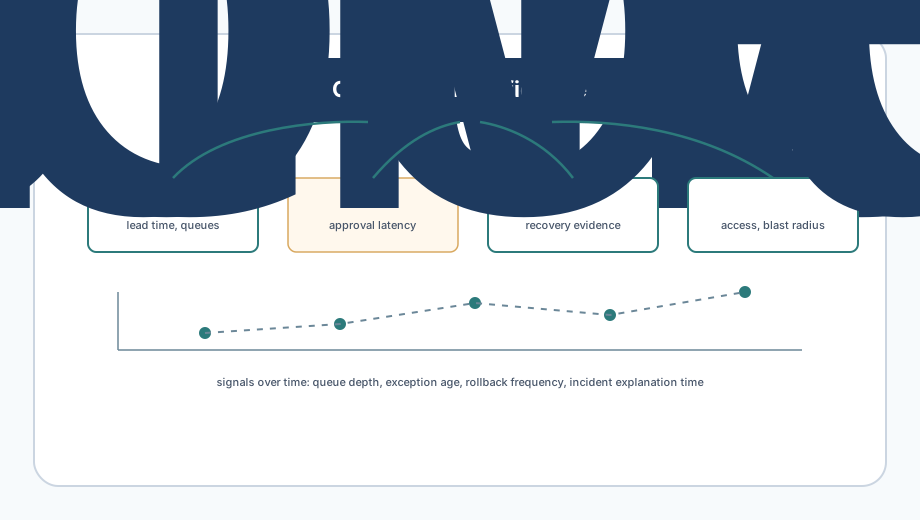
How flow, friction, resilience and trust-boundary effectiveness combine into operational confidence.
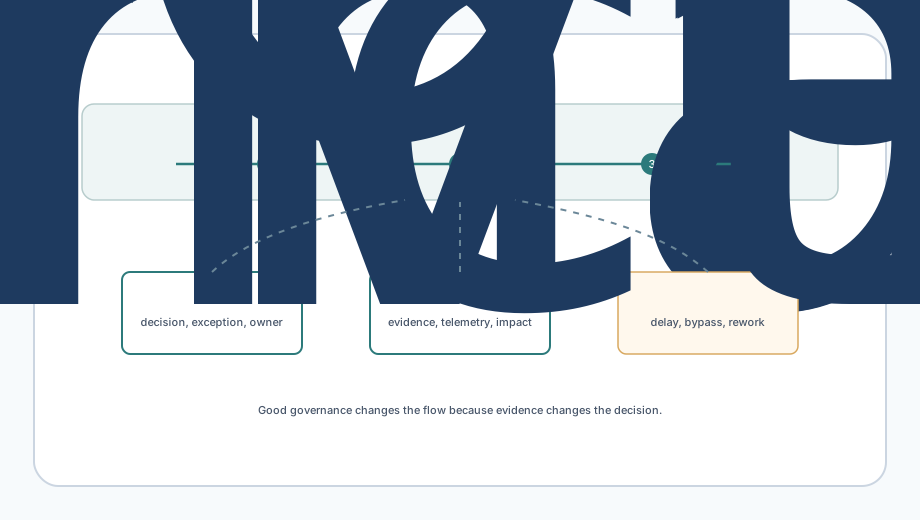
How evidence loops keep governance connected to delivery reality rather than approval theatre.
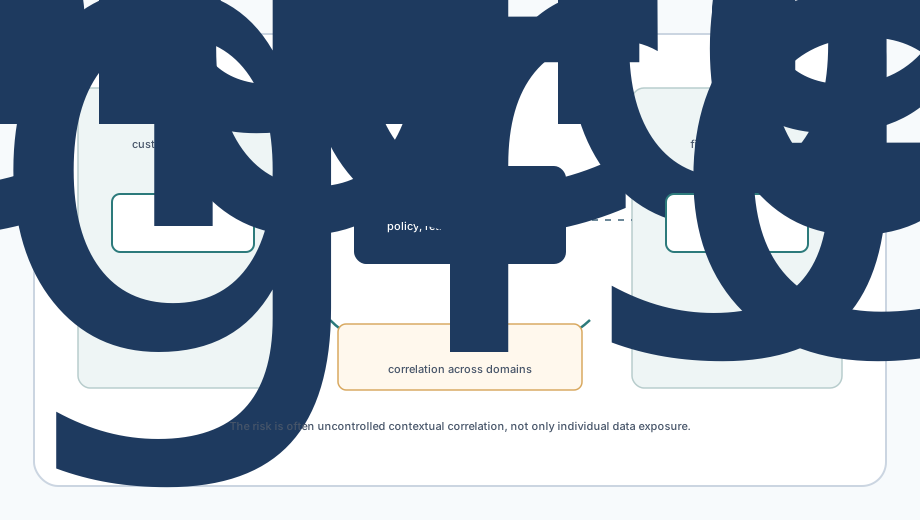
How retrieval, tools, models and human judgement need bounded access across organisational knowledge domains.
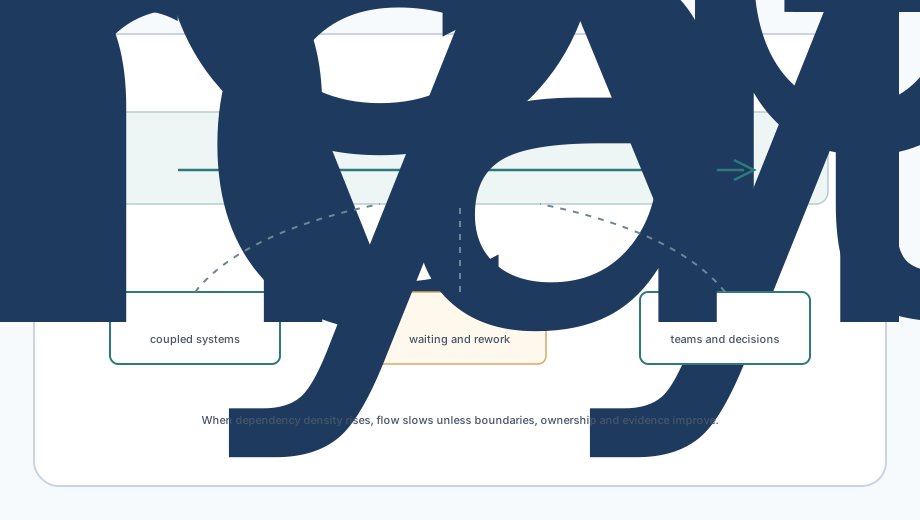
How hidden coupling and coordination load turn delivery flow into operational drag.
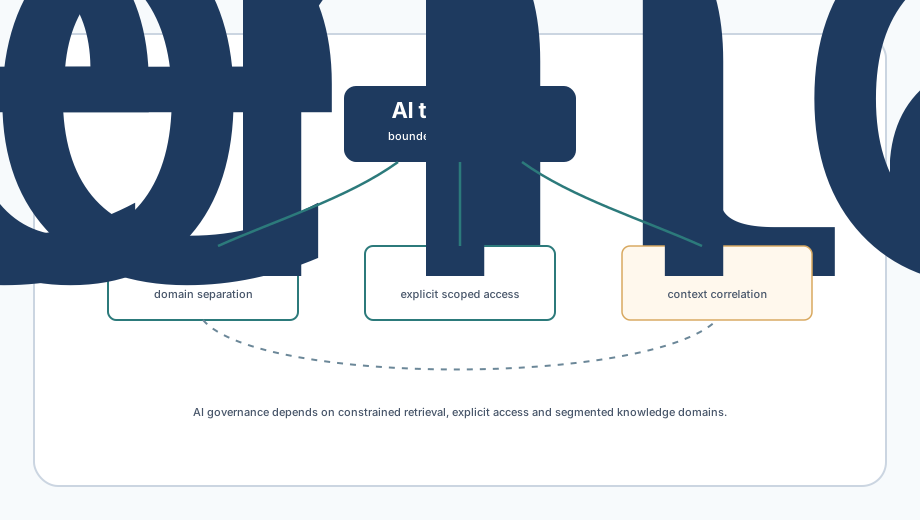
How AI context governance depends on segmentation, explicit access and bounded retrieval.

How segmentation, compartmentalisation and trust boundaries limit the spread of failure or misuse.
Orientation
An orientation to the Platform Clarity operational architecture worldview and how the topic library fits together.
AI governance
AI trust zones as bounded operating environments for data exposure, model use, human oversight and organisational accountability.
Architecture control
Architectural segmentation as the design of separable domains, failure boundaries and governed integration points.
Architecture control
Transition architecture as the governed operating state between legacy systems and target platforms.
Control and containment
Compartmentalisation as controlled visibility, blast-radius reduction and need-to-know design for organisations and systems.
Data governance
Information classification as a practical control for deciding how data should move, be protected and be used.
Delivery and operations
DORA metrics interpreted as flow, feedback and operational friction signals rather than a scoreboard for engineering teams.
Delivery systems
Operational flow as the movement of work, decisions, evidence and feedback through the organisation.
Enterprise architecture
Capability mapping as a way to reason about what an organisation must be able to do before arguing about systems.
Enterprise architecture framework
TOGAF as an operating discipline for coordinating change across capability, governance, technology and investment decisions.
Governance and delivery
Operational governance as the mechanism that keeps decisions, controls and delivery reality connected under pressure.
Operational visibility
Observability as the ability to understand system and operational behaviour from evidence rather than reassurance.
Quality systems
ISO 9001 as a quality management system for feedback, correction and repeatable operational maturity.
Security and assurance
NIST SP 800-53 Rev. 5 as a broad control catalogue for governing security, privacy and operational assurance.
Security architecture
Trust boundaries as the points where assumptions change and evidence, control or verification must increase.
Security architecture
Zero Trust as constrained implicit trust across organisational, identity, network, data and operational boundaries.
Security governance
ISO 27001 as an organisational risk governance system rather than a checklist of technical security controls.
These are reference pages, not campaign landing pages. Use them as citation targets for future Platform Clarity articles, advisory notes, governance discussions and architecture review material.
